Mountains, Light, and Lessons from Nature’s Greatest Architect
The Road That Changes Everything
The drive from Calgary to Banff begins quietly.
For nearly an hour the road stretches across open prairie, the horizon wide and uninterrupted. Then slowly, almost without warning, the landscape begins to change.
Dark shapes appear in the distance.
At first they look like clouds hovering above the horizon. But as the road continues west, those shapes sharpen into jagged silhouettes. Within minutes, the Canadian Rockies rise dramatically from the earth like a massive stone wall.
Every time I make this drive, I instinctively slow down.
As an architect, I spend much of my time thinking about form, proportion, and structure within the built environment. But entering the Rockies feels like stepping into nature’s own masterwork — a landscape shaped not by blueprints, but by glaciers, tectonic movement, and millions of years of erosion.
No building I’ve ever encountered compares to the sense of scale here.
In cities we measure buildings in meters and floors.
In the Rockies, the mountains measure themselves in thousands of meters and millions of years.
And that shift in perspective is what makes exploring Banff so unforgettable.
Arriving in Banff
The town of Banff sits at the heart of Banff National Park, surrounded by towering peaks that feel almost impossibly close.
Cascade Mountain rises behind the town like a permanent backdrop, giving Banff one of the most recognizable skylines in Canada. Despite being one of the country’s most visited destinations, Banff still manages to maintain the charm of an alpine village.
Banff Avenue is lined with wooden storefronts, cafés filled with hikers and skiers, and outdoor gear shops where travelers prepare for the adventures waiting just beyond town.
Yet what makes Banff special isn’t the town itself.
It’s how quickly you can leave it behind.
Within minutes you can find yourself standing beside a rushing glacial river, hiking through dense pine forests, or gazing up at mountain walls that rise thousands of feet above the valley floor.
In Banff, wilderness is never far away.
The Famous Turquoise Lakes
If the mountains define Banff, its lakes give the landscape its unforgettable color.
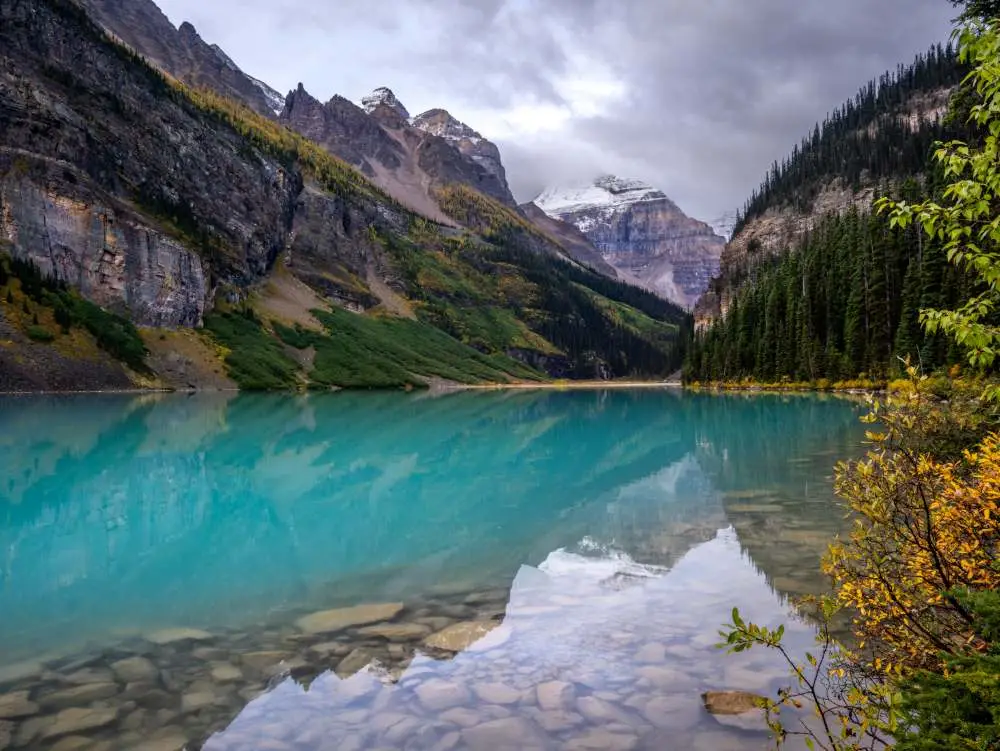
The brilliant turquoise waters seen throughout the Rockies are caused by something called rock flour. As glaciers grind slowly against surrounding mountains, they produce microscopic particles of stone. These particles remain suspended in the water and reflect sunlight in a way that produces the vibrant blue-green color that makes these lakes look almost surreal.
Lake Louise
Lake Louise is perhaps the most famous lake in Canada.
Set beneath Victoria Glacier and surrounded by towering peaks, the lake often appears perfectly still, reflecting the surrounding mountains like a mirror. In summer, red canoes glide across the water, while hikers explore the many trails that begin at the lakeshore.
In winter, the frozen lake transforms into a natural skating rink beneath snow-covered peaks.
Moraine Lake
If Lake Louise feels elegant, Moraine Lake feels wild.
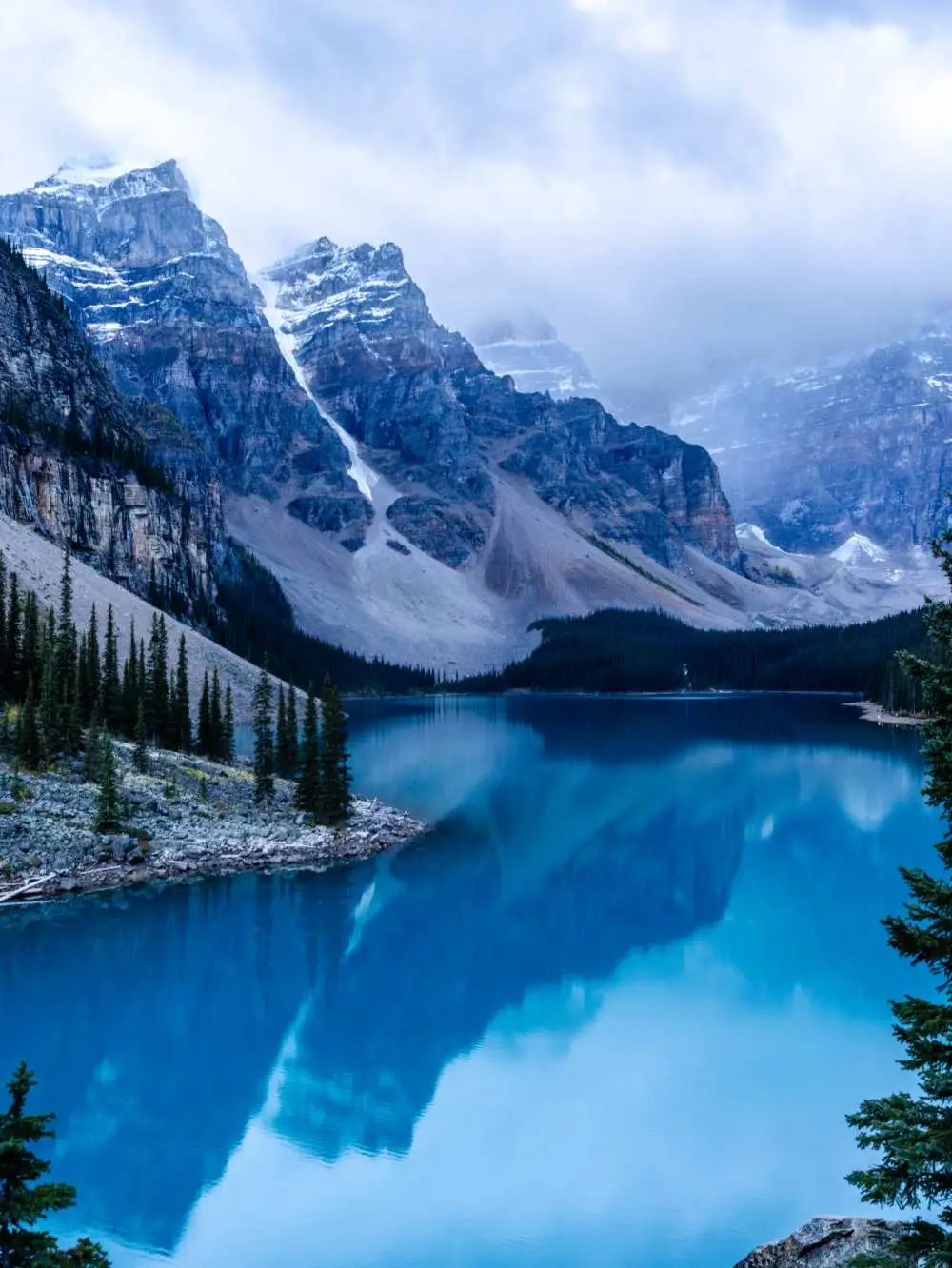
Hidden within the Valley of the Ten Peaks, Moraine Lake is surrounded by dramatic mountain spires that rise sharply above the water. The view from the rocky shoreline is one of the most photographed landscapes in Canada.
And for good reason — the light here is extraordinary.
Crafty Sparrow Tip: Photographing Moraine Lake
If you’re hoping to photograph Moraine Lake, arrive before sunrise.
During the summer months this means getting there around 4:30 AM.
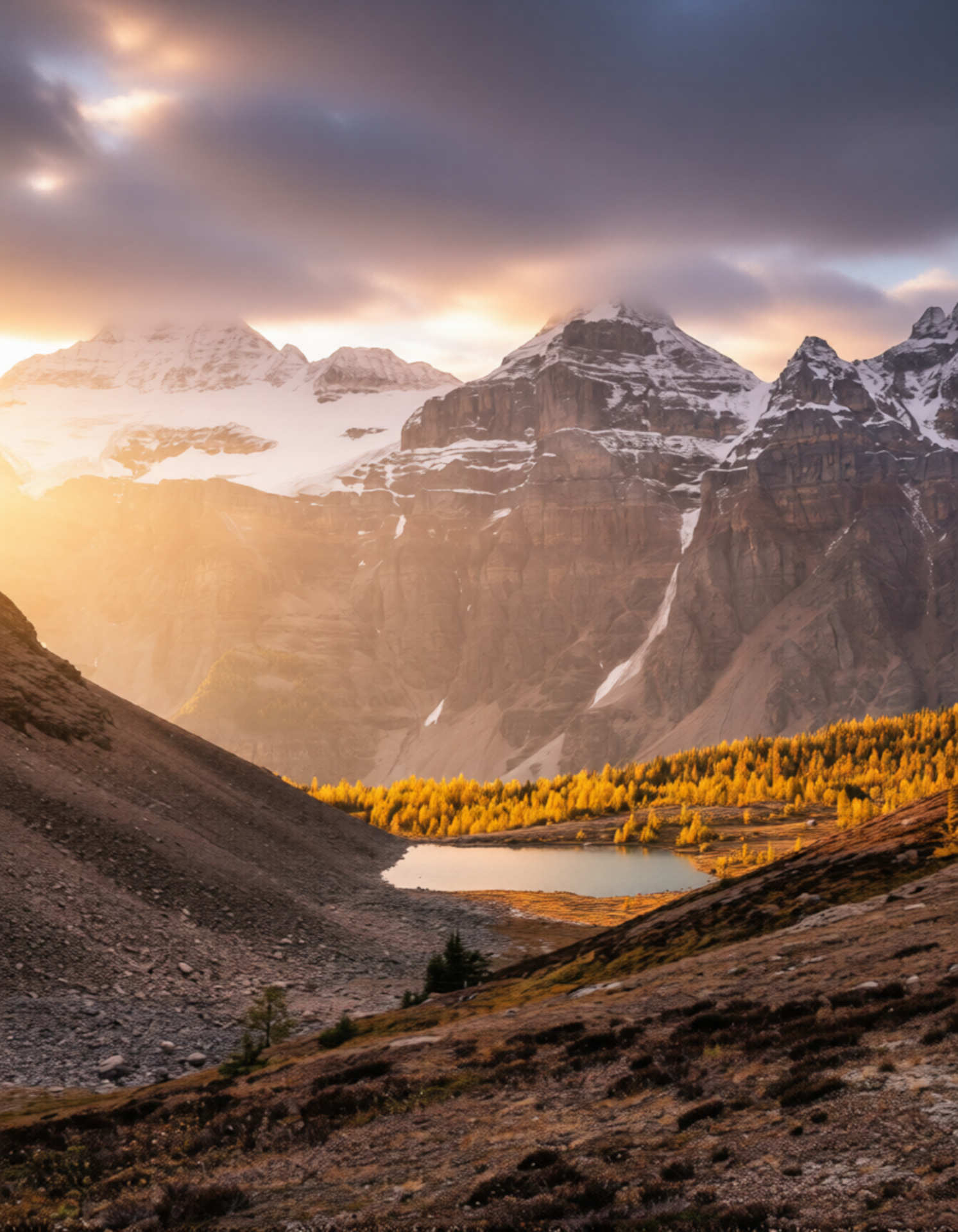
It may sound extreme, but the reward is unforgettable. As the first rays of sunlight strike the Valley of the Ten Peaks, the mountains glow golden before the light slowly reaches the lake below.
For photographers, it’s a masterclass in natural lighting.
Hiking Into the Rockies
To truly experience Banff, you have to step off the road and onto the trails.
Many visitors see the famous lakes and viewpoints, but hiking deeper into the mountains reveals a completely different side of the park.
Some trails are gentle forest walks along rivers or lakeshores. Others climb steeply into the alpine, revealing hidden valleys, glaciers, and panoramic viewpoints.
As someone who spends most of his professional life designing within the human scale of architecture, hiking in the Rockies always reminds me how small those scales really are.
Standing on a ridge surrounded by endless peaks makes the mountains feel like nature’s own unfinished masterpiece — rugged, unpredictable, yet perfectly composed.
Iconic Hikes Around Banff and Lake Louise
Over the years I’ve hiked many trails in Banff multiple times, and each visit feels different depending on the season, weather, and light. The Lake Louise area in particular offers several hikes that showcase some of the most spectacular scenery in the Rockies.
Lake Agnes Tea House
One of the most beloved hikes near Lake Louise leads to Lake Agnes, a small alpine lake tucked beneath towering rock walls.
The trail climbs steadily through a forest of pine and spruce before reaching the historic Lake Agnes Tea House, which has been serving tea and baked goods to hikers for over a century.
Sitting beside the lake with a cup of tea after the climb feels like stepping back in time.
Little Beehive and Big Beehive
From Lake Agnes, hikers can continue toward two spectacular viewpoints known as Little Beehive and Big Beehive.
Little Beehive offers a remarkable view looking down over Lake Louise, where the famous Fairmont Chateau appears almost miniature against the immense mountain backdrop.
Big Beehive requires a bit more effort, but rewards hikers with sweeping views across the entire valley.
Devil’s Thumb
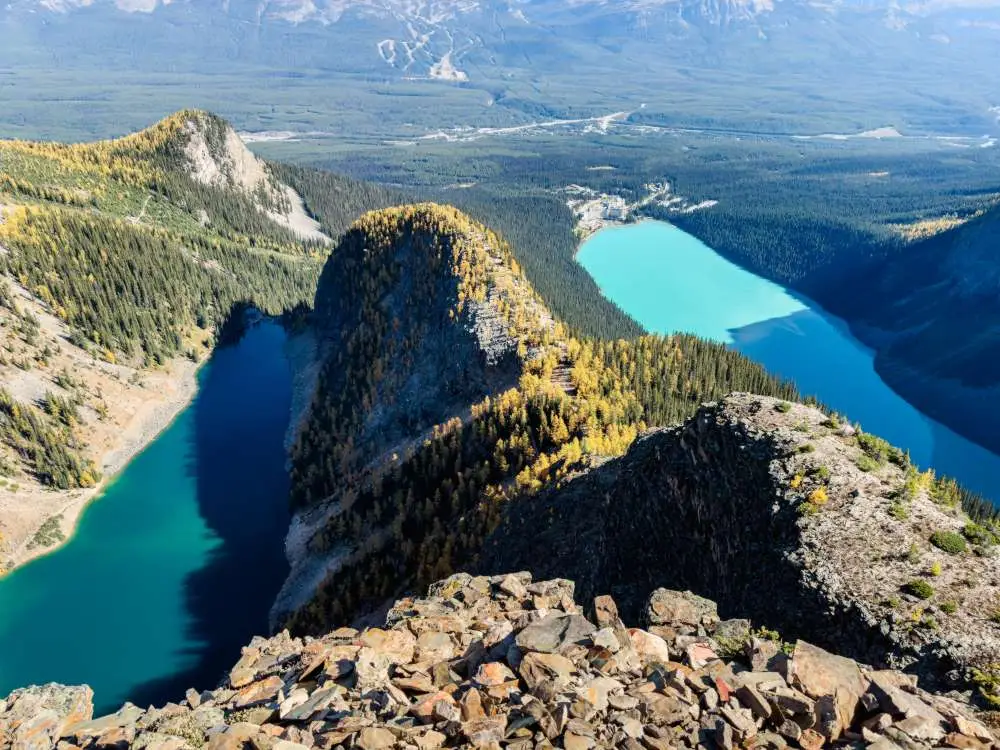
For hikers seeking a more demanding climb, the trail to Devil’s Thumb rises steeply above Lake Agnes.
From the summit ridge, both Lake Louise and Lake Agnes are visible far below, framed by an incredible panorama of surrounding peaks.
It’s one of the most dramatic viewpoints in the region.
Plain of Six Glaciers
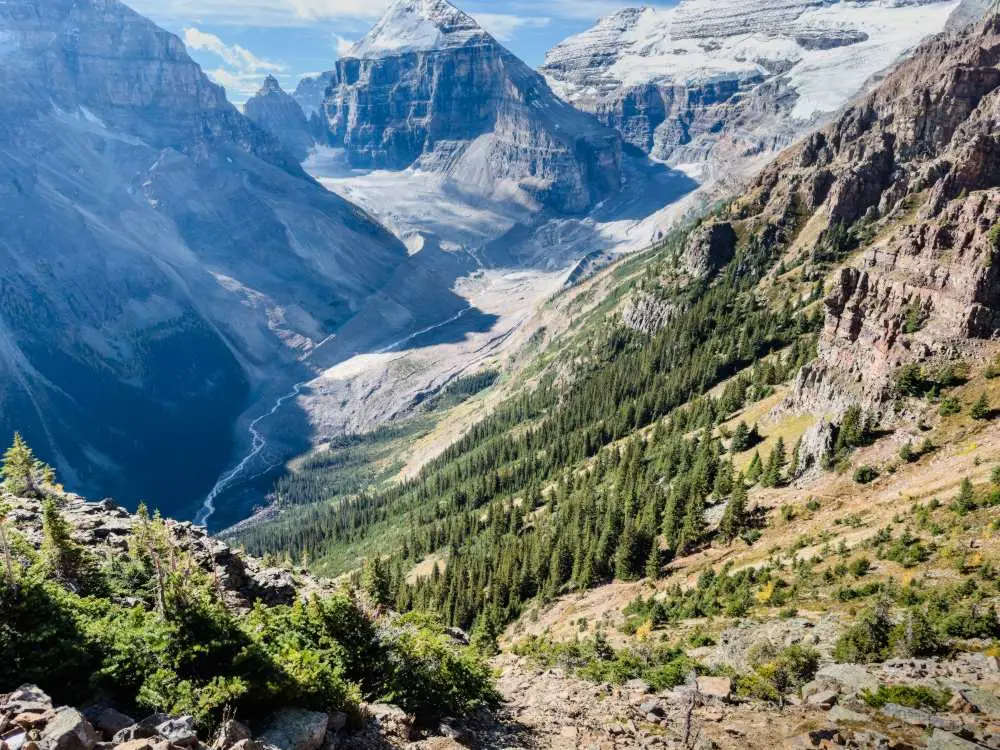
Another unforgettable hike begins along the shores of Lake Louise and gradually climbs into the wide valley known as the Plain of Six Glaciers.
As the trail leaves the crowds behind, massive glaciers come into view along the surrounding mountain walls.
At the end of the trail sits another historic tea house where hikers can rest while gazing toward the glaciers above.
Sentinel Pass
Near Moraine Lake lies one of the most spectacular alpine hikes in Banff: Sentinel Pass.
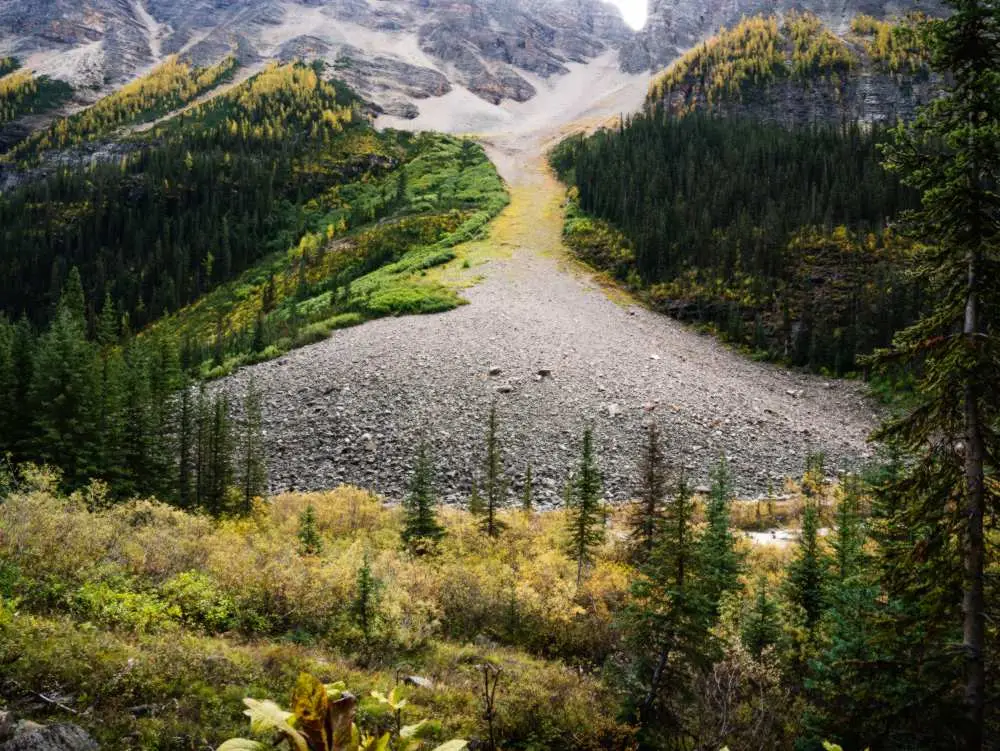
The trail climbs through Larch Valley, which becomes especially beautiful in autumn when the larch trees turn brilliant gold.
Above the valley, steep switchbacks lead to the pass itself, where sweeping views stretch across endless mountain ranges.
Peyto Lake
While not a long hike, Peyto Lake offers one of the most iconic views in Banff National Park.
From the viewpoint, the lake’s wolf-head shape and striking turquoise color create one of the most recognizable landscapes in the Canadian Rockies.
Crafty Sparrow Tip: Mountain Hiking Preparation
Mountain hiking requires preparation and respect for the terrain.
Before setting out on longer hikes such as Sentinel Pass, Devil’s Thumb, or the Plain of Six Glaciers, it’s wise to bring several essential items.
Mountain hiking essentials include:
• Plenty of water and energy snacks
• Bear spray and knowledge of how to use it
• Weather layers — mountain conditions change quickly
• Proper hiking shoes or boots
• Hiking poles or a walking stick for steep terrain
• A trail map or mobile hiking app
• A flashlight or headlamp in case the hike takes longer than expected
• A whistle for emergencies
Preparation makes the experience safer and far more enjoyable.
Wildlife in Banff
Banff National Park is home to an incredible variety of wildlife.
Elk wander through town, bighorn sheep cling to rocky cliffs, and deeper within the forests live black bears and grizzly bears.
Seeing these animals in their natural habitat is one of the most exciting parts of visiting the Rockies.
Wildlife Safety Reminder
When hiking in Banff National Park:
• Carry bear spray
• Make noise while hiking
• Keep a safe distance from wildlife
• Never feed animals
Respecting wildlife protects both visitors and the animals themselves.
Best Time of Day to Experience Banff
Timing can completely change how a place feels.
Moraine Lake: Sunrise
Lake Louise: Early morning or evening
Sentinel Pass: Midday for best visibility
Plain of Six Glaciers: Morning hike
Peyto Lake: Late morning for vibrant turquoise color
Arriving early often means quieter trails, calmer water reflections, and better lighting.
Photographing the Rockies
The Canadian Rockies are one of the most photogenic landscapes in the world.
But capturing them well requires patience.
Mountains shape light in dramatic ways. Shadows move quickly across valleys, clouds shift constantly, and the lakes change color depending on the angle of the sun.
As an architect fascinated by composition and scale, I find photographing the Rockies endlessly rewarding.
Crafty Sparrow Tip: Photography
To capture better mountain photos:
• Shoot at sunrise or sunset
• Use foreground elements like rocks or trails
• Look for lake reflections in calm morning water
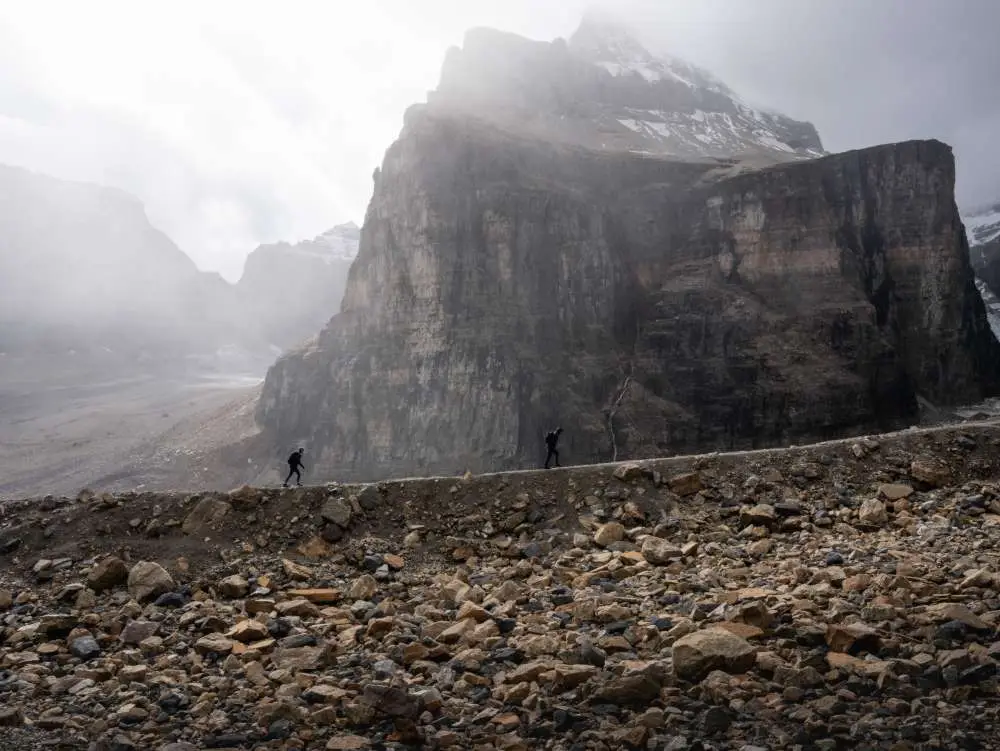
• Include a person in the frame to show scale
• Be patient — the best light often appears suddenly
Some of the best photographs happen when you simply wait.
Planning Your Banff Trip
A few practical considerations can make your Banff trip much smoother.
Download Offline Maps
Cell service can be unreliable in the mountains.
Before driving through Banff National Park, it’s extremely helpful to download offline maps on your phone using apps like Google Maps.
This allows GPS navigation to continue working even when mobile signals disappear.
It’s a small step that can make navigating mountain roads much easier.
Best Time to Visit
June to September offers the best hiking conditions.
September and early October are particularly beautiful when larch trees turn golden.
Winter brings incredible skiing and snow-covered scenery.
Getting Around
Having a rental car provides the most flexibility for exploring lakes and trailheads throughout the park.
The Quiet Lessons of the Mountains
Perhaps the greatest gift of visiting the Rockies is the perspective they offer.
In cities we build structures meant to last decades or centuries.
Here, the landscape has been shaped over millions of years.
I find that contrast deeply inspiring.
The mountains remind me that while human design seeks perfection, nature achieves beauty through imperfection — through erosion, randomness, and time.
Standing among these peaks, it becomes clear that the world’s greatest architecture was never built.
It was carved.
Final Thoughts
Exploring Banff and the Canadian Rockies is more than simply visiting a destination.
It’s an experience that changes how you see landscapes, scale, and time.
Whether hiking alpine trails, photographing turquoise lakes at sunrise, or simply standing quietly beneath towering peaks, the Rockies leave a lasting impression.
And once you’ve experienced them, you’ll almost certainly find yourself planning the next trip back.
Most visitors should plan to spend at least three to five days exploring Banff National Park.
This allows enough time to see iconic locations like Lake Louise, Moraine Lake, and Peyto Lake while also fitting in several memorable hikes.
Hikers who want to explore trails such as Sentinel Pass or the Plain of Six Glaciers Trail may want closer to five or six days to fully enjoy the park without rushing.
The most popular months to visit Banff National Park are June through September, when hiking trails are snow-free and alpine lakes reach their vibrant turquoise color.
September is often a favorite among hikers because the weather is cooler and the larch trees turn golden in areas like Larch Valley near Moraine Lake.
Winter is also spectacular for skiing, snowshoeing, and frozen lake scenery.
While there are shuttle services connecting some major locations, having a car provides the most flexibility for exploring the park.
Many scenic viewpoints and trailheads along the Icefields Parkway are best reached by driving.
Before leaving town, it’s a good idea to download offline maps on your phone so navigation continues to work even when mobile signals disappear in the mountains.
Yes. Banff National Park offers a wide range of hiking trails suitable for all fitness levels.
Beginner-friendly trails include:
- Lake Agnes Trail
- Peyto Lake Viewpoint Trail
- Moraine lake trail
- Lake Louise Trail
- Johnston Canyon Trail
More challenging hikes include:
- Devil’s Thumb
- Sentinel Pass
- Plain of Six Glaciers Trail
- Mt. Fairview
- Mt. Whyte
- Mt. St. Piran
- Mt. Temple
The bright turquoise color seen in lakes like Lake Louise and Moraine Lake is caused by rock flour.
As glaciers grind against surrounding mountains, they produce extremely fine rock particles. When these particles remain suspended in the water, they scatter sunlight in a way that creates the lakes’ famous blue-green color.
Explore more Great Canadian Landscapes:
• Cape Breton & the Cabot Trail
• Whistler & Garibaldi
• Newfoundland