When planning a definitive journey to East Asia, mapping out a japan travel itinerary tokyo kyoto osaka is the quintessential starting point. Often referred to as the “Golden Route,” these three iconic hubs form the backbone of the country’s cultural identity. Yet, to the uninitiated, they might look like mere stops on a high-speed transit line. Look closer through a deliberate lens, and you discover three completely distinct cities running on entirely different frequencies.
I’ll admit, before landing, I saw how daunting the planning could be. Many travelers—including members of my own family who have visited Japan multiple times over a three-year span—often stick to the same familiar corners because researching the massive web of attractions feels overwhelming. Yet, by approaching the trip with a clear, step-by-step plan, I managed to cover and experience significantly more ground on my very first visit than they had in years of cumulative travel.
On this journey, I left the heavy, bulky camera gear behind, choosing instead to carry a single, highly tactile tool: the Olympus Pen-F. I chose this specific camera because it draws a profound parallelism with how I interpret Japan. Japan is a place of staggering breadth in heritage and culture, unapologetically displayed across the modern landscape, yet it remains at the absolute forefront of technological advancement. The Pen-F mirrors this duality perfectly: its timeless, mechanical rangefinder profile and analog dials pay direct homage to mid-century craftsmanship, yet beneath that retro skin, it houses a masterfully engineered suite of modern digital features—from its 5-axis image stabilization to advanced sensor technology.
Using the dedicated front monochrome dial forced me to slow down, capturing a society that negotiates its past and future in the exact same manner. Whether you are sketching out your very first japan travel itinerary tokyo kyoto osaka or looking to tie these regions together into a seamless trip, here is how Japan’s Big Three break down from a traveler’s perspective, complete with essential logistics and hidden discoveries.
🗺️ The Personality of Three Cities: How They Balance Past and Present
To truly understand the core of your tokyo kyoto osaka highlights, one must look at how each city handles its own history. They sit on a fascinating spectrum:
- Kyoto is an old world that has accommodated the new without ever letting go of its original roots. It is a masterclass in cultural preservation—where modern life naturally slows down to respect age-old traditions.
- Osaka is a city that has marched forward into the future in a raw, energetic, and unapologetically modern manner. It is a sprawling metropolis in constant motion, yet it still houses its ancient treasures right in the open.
- Tokyo represents the ultimate culmination: a massive metropolis where hyper-modernity and deep tradition live together in total, polished harmony.
📱 Overcoming First-Timer Friction: Cash, Transit, and Connectivity
Before diving into the destinations, let’s address the primary anxieties that paralyze most first-time travelers: navigating the world’s most complex transit systems and managing local currency.
1. Demystifying the Cash vs. Card Dilemma
A common misconception is that Japan is strictly a cash-only society or that you need to wait in long terminal lines for physical currency exchange. While having some physical yen is essential for small street food stalls or traditional temple coin boxes, the modern ecosystem is incredibly digital-friendly.
Instead of exchanging massive amounts of cash at high-fee airport booths, simply carry a debit or credit card with low foreign transaction fees. You can seamlessly pull local yen directly from 7-Eleven or Lawson ATMs, which are ubiquitous across every city, offer excellent real-time exchange rates, and feature full English interfaces.
2. The Next-Gen Transit Hack: No Physical Cards Required
The dense, overlapping subway maps of Tokyo and Osaka look like an intricate maze, but you can bypass the ticket machines entirely.
- Skip the Plastic: You do not need to stand in line for a physical Suica or Pasmo card at the airport. You can add a digital transit card directly to your Apple Wallet on your iPhone.
- Instant Mobile Refills: Once the card is in your wallet, you can reload funds instantly using your linked Apple Pay credit cards. Whether you are riding a local bus in Kyoto or a subway line in Tokyo, you simply tap your phone at the turnstile. If you have active data via an eSIM or pocket Wi-Fi, you can top up your balance via mobile data mid-transit on the go without ever approaching a kiosk or a physical ticket station.
⛩️ 1. Kyoto: The Soul of Timeless Preservation
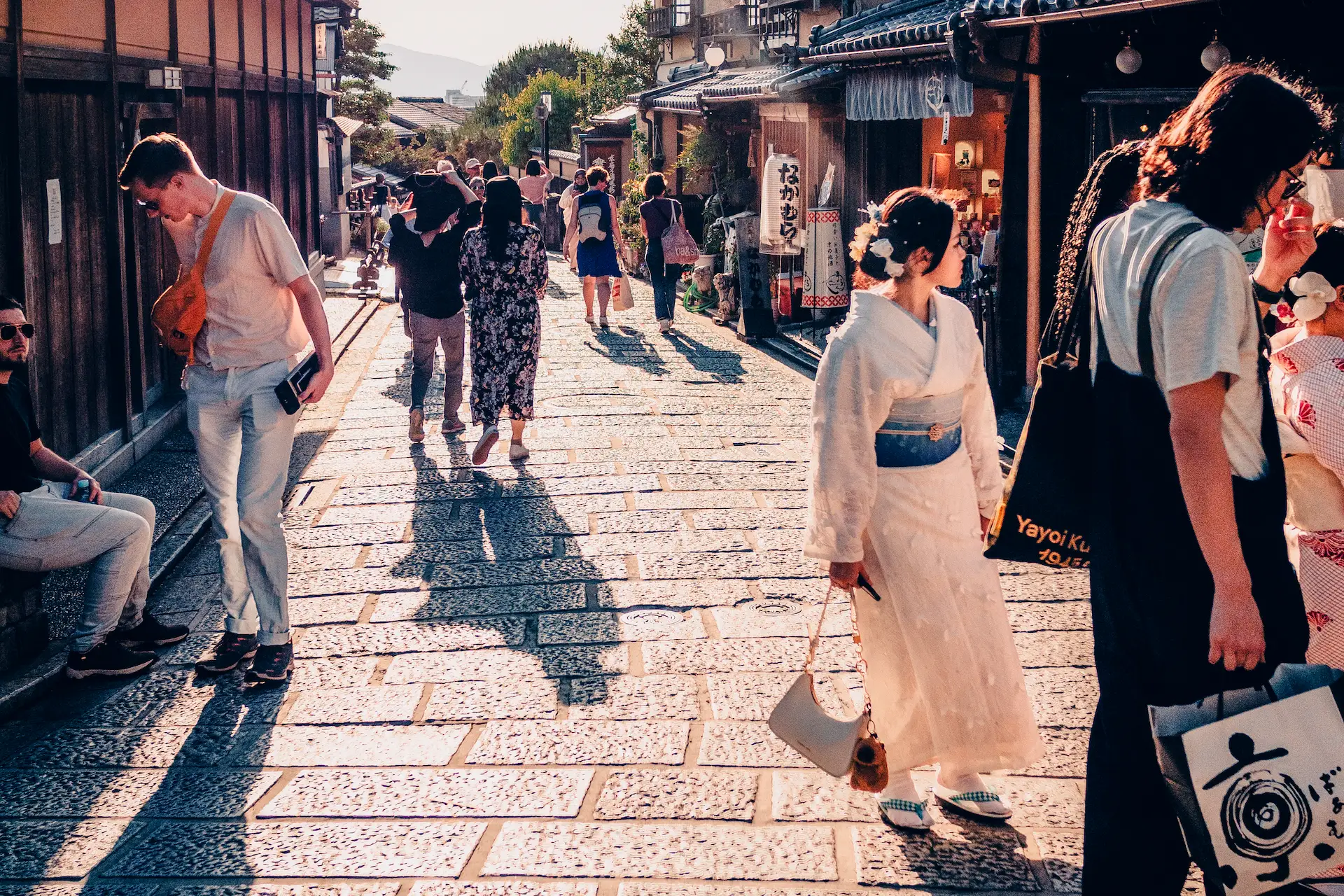
Kyoto doesn’t just display history; it forces you to walk through it. It is an indispensable stop on any comprehensive japan travel itinerary tokyo kyoto osaka. Here, the modern world instantly evaporates the moment you turn down the side streets of the historic districts. You are immediately enveloped by rich, weathered wooden townhouses and dark timber fences standing side-by-side with grand, sweeping temple rooflines.
The ground beneath your feet transitions to uneven, ancient cobblestones that catch the low, golden hour light beautifully. This isn’t a dead museum display, either—the heritage is alive, populated by local folks moving gracefully through the tight alleys in traditional, customary Japanese clothing, their wooden sandals clicking against the stones. Kyoto has allowed modern transit and convenience to exist, but its original identity remains completely unyielding.
Essential Attractions & Local Experiences
- The Historic Districts (Gion, Higashiyama, & Sannenzaka): Walking through the Gion district, Kennin-ji Temple, and the traditional stone-paved streets of Sannenzaka feels incredibly surreal. Capturing the iconic silhouette of the Yasaka Pagoda framed by traditional storefronts is a mandatory shot for any traveler.
- Arashiyama Bamboo Grove & Togetsukyo Bridge: To truly appreciate the scale of the soaring stalks at Arashiyama and the sweep of the Togetsukyo Bridge, you have to beat the crowds. Standing there at dawn, the way the light filters through the bamboo is breathtaking.
- Kinkaku-ji (The Golden Pavilion): The blinding gold leaf of the pavilion mirroring the surrounding pond shows how beautifully traditional craftsmanship blends with the natural landscape.
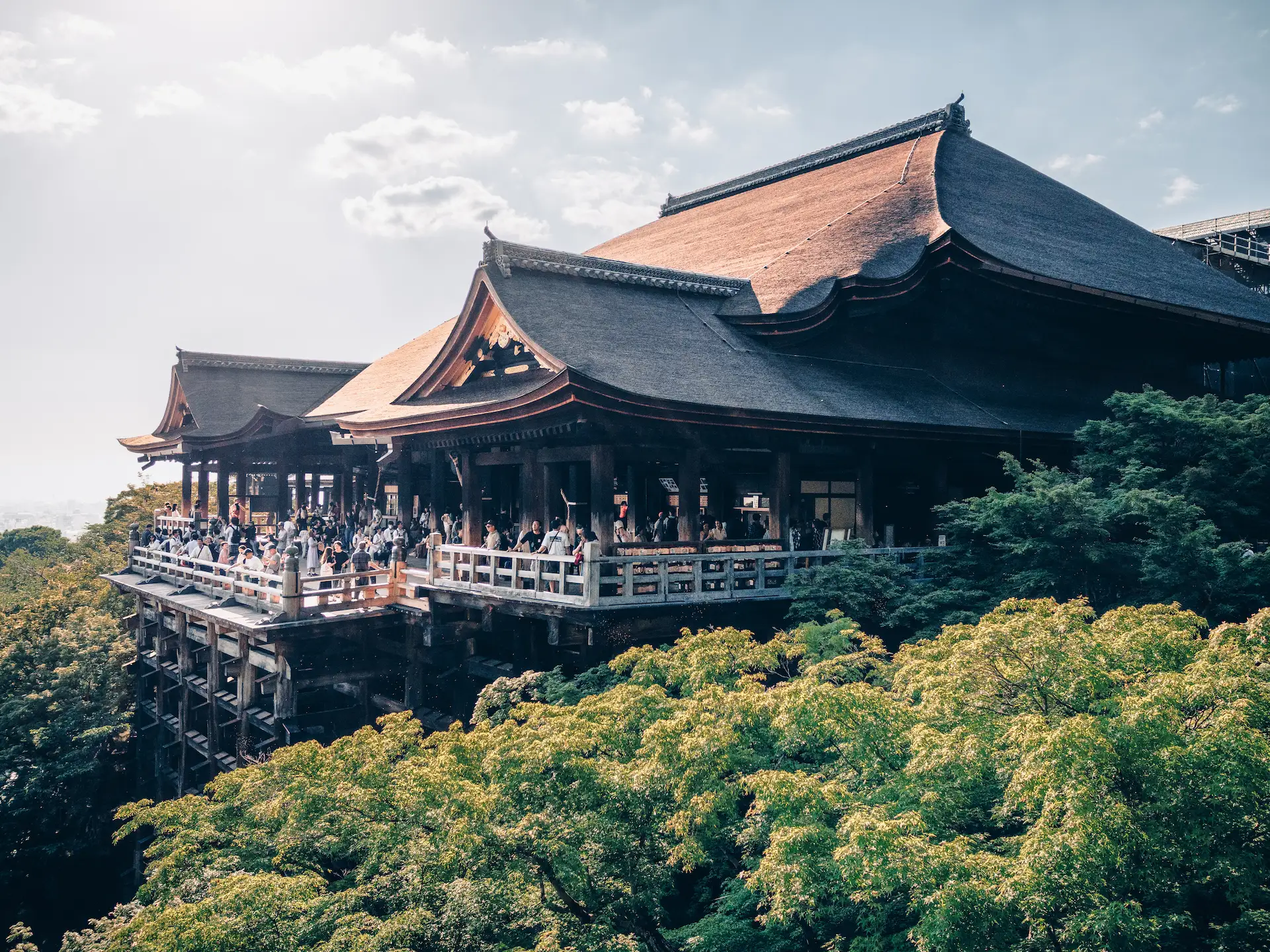
- Kiyomizu-dera Temple & The Philosopher’s Path: Famous for its massive wooden veranda built entirely without a single nail, Kiyomizu-dera offers sweeping sunset views of the city. Pair this with a contemplative walk along the canal of the Philosopher’s Path.
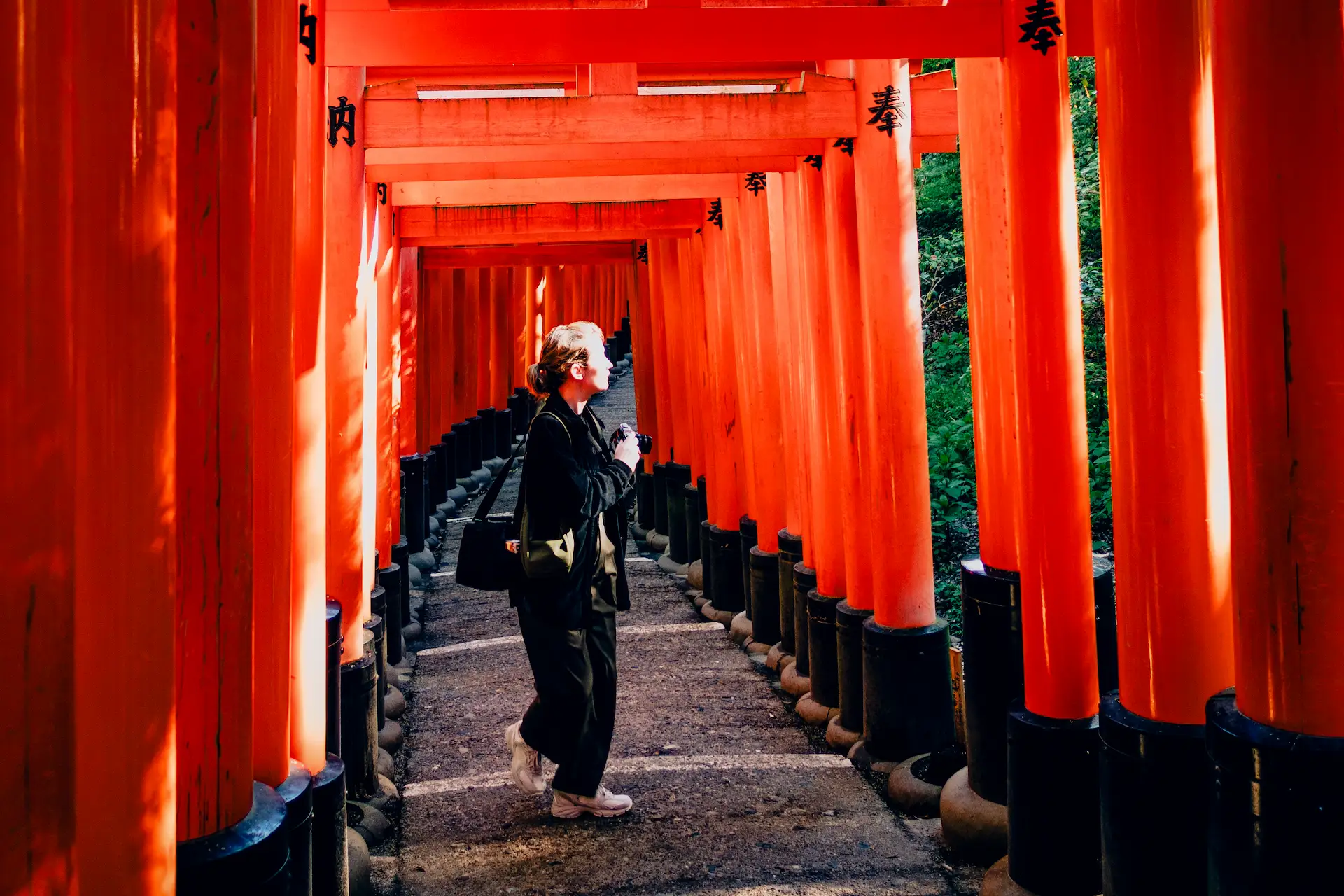
- Fushimi Inari Shrine at Night: While stunning by day, returning to the endless tunnels of vermilion torii gates at night offers a completely different, atmospheric, and uncrowded perspective.
- Nishiki Market: A narrow, five-block shopping street packed with traditional food stalls, perfect for tasting local delicacies like matcha treats and fresh seafood.
🐙 2. Osaka: The High-Energy, Gastronomic Counterweight
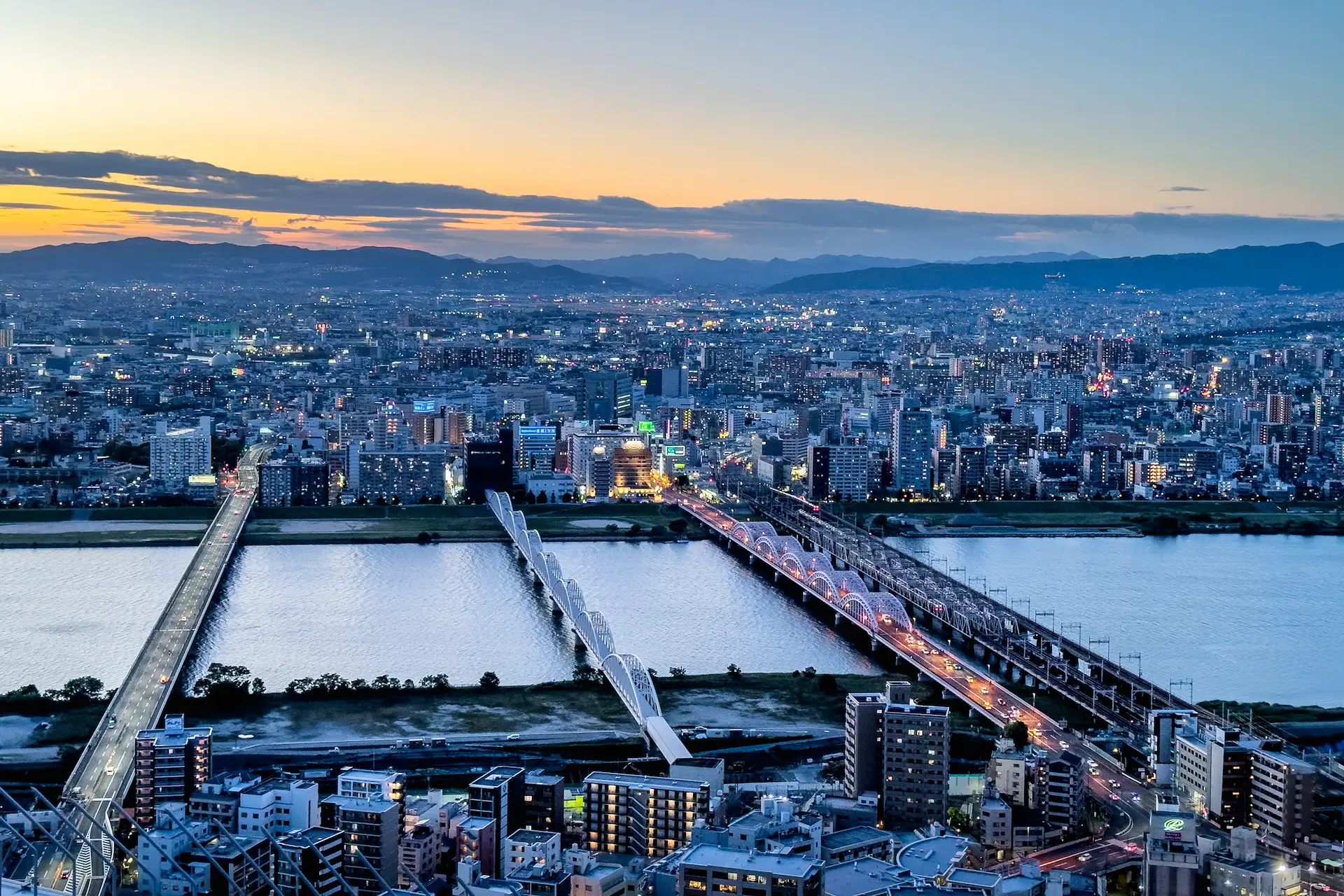
Just a short train ride away from the quiet restraint of Kyoto sits Osaka. The contrast is instant. Osaka didn’t just step into the modern era; it charged into it. The cityscape feels lively, bustling, and thrillingly unpolished. It is an urban center in a state of perpetual, visceral motion, dominated by massive train lines and towering skyscrapers. Yet, it hasn’t erased its past; it simply grew around it. You can be standing in a hyper-dense, roaring commercial district, turn a corner, and suddenly find yourself face-to-face with the massive, ancient stone walls of Osaka Castle.
The Urban Rhythm: A Culture of Kuidaore
Osaka runs on a faster, friendlier, and distinctly more unpretentious frequency than its neighbors. There is a famous local maxim—Kuidaore—which translates roughly to “eat until you drop.” While Tokyo prioritizes hyper-polished, precision dining and Kyoto masters formal, quiet kaiseki multi-course meals, Osaka is the undisputed street food capital of Japan. Here, food is an eye-level, communal spectacle. The sensory awareness of food is built into the very lifestyle of the streets, commanding a dominant presence you simply don’t feel as heavily anywhere else in the country.
Essential Attractions, Neon Maximalism, and Street Food Staples
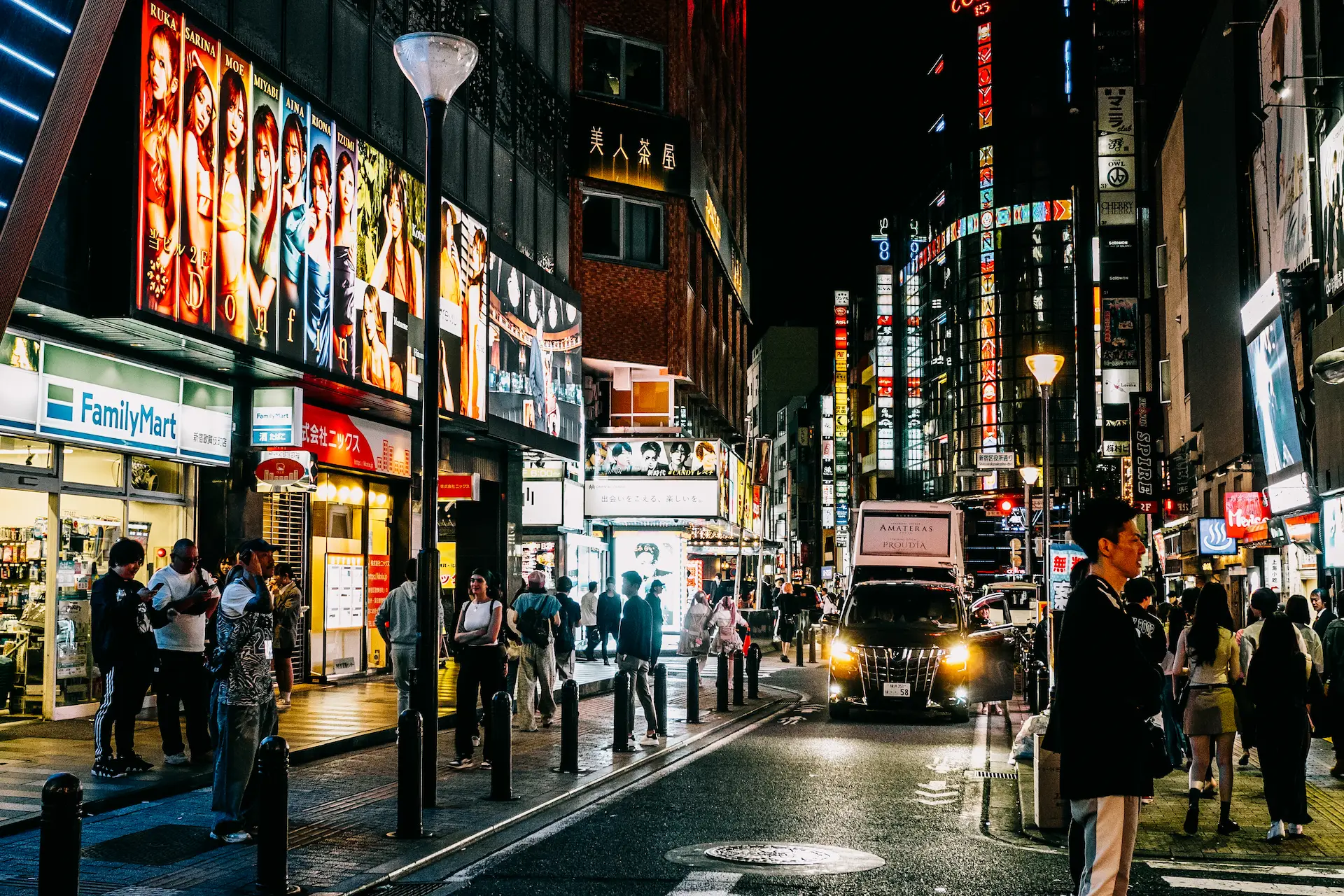
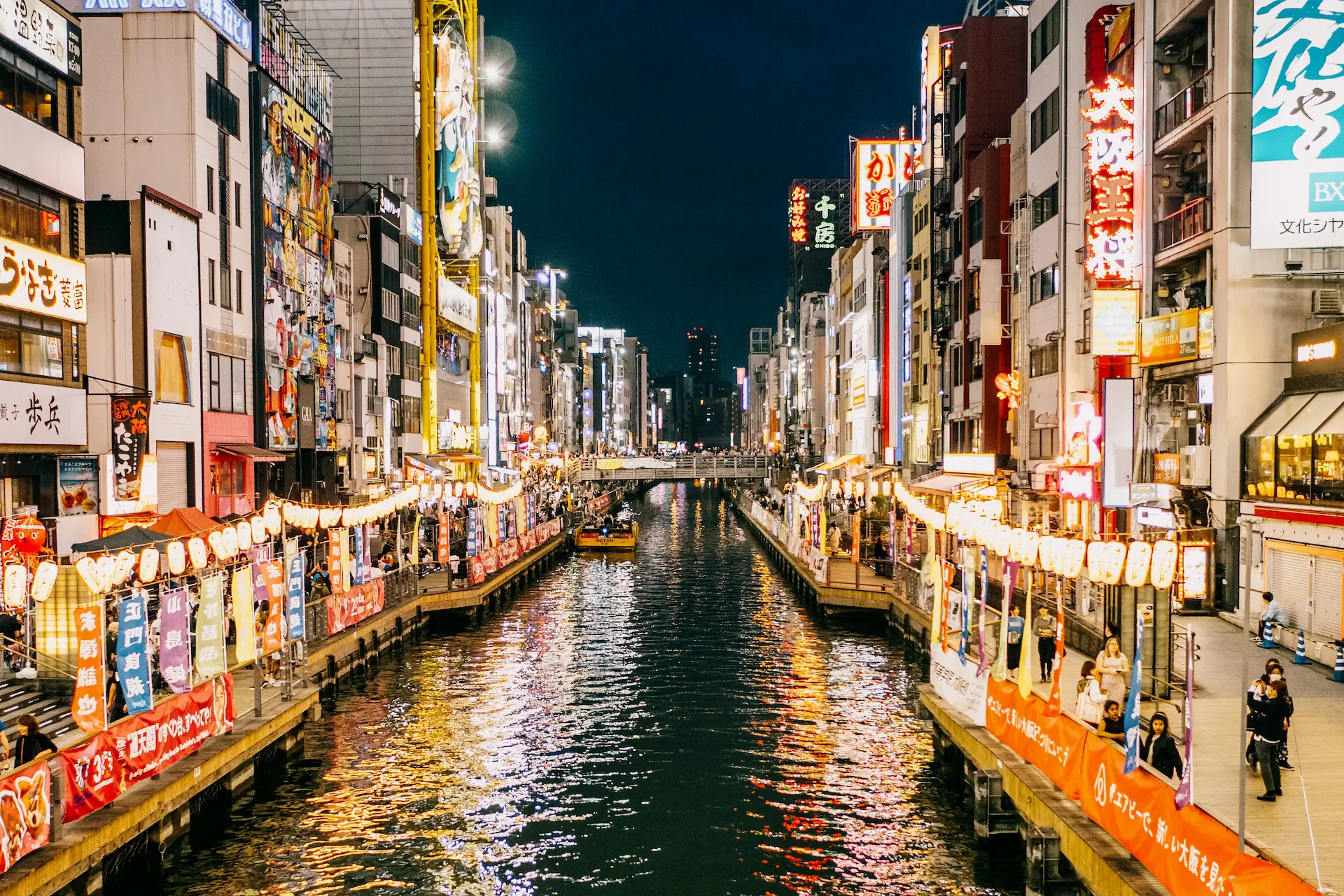
- Dotonbori & Shinsaibashi: Standing on the Ebisu-bashi bridge over the Dotonbori canal at night is a masterclass in visual fun. The storefronts are defined by massive, three-dimensional mechanical signs—giant moving crabs, overhead octopuses, and glowing billboards like the iconic Glico Running Man. The air is thick with the scent of sizzling batters and sweet savory sauces. It is a street photographer’s paradise, best experienced with a camera in one hand and local street food staples in the other:
- Takoyaki: The definitive Osaka street food—piping-hot, crispy-on-the-outside, gooey-on-the-inside octopus balls topped with savory sauce, Japanese mayo, and dancing bonito flakes.
- Okonomiyaki: A thick, savory cabbage pancake packed with various meats and seafood, grilled right on flat-top griddles right at the street front.
- Kushikatsu: Deep-fried, golden-brown skewers of meat, seafood, and seasonal vegetables, served with a strict “no double dipping” rule in the communal sauce vats.
- Umeda Sky Building: For a true look at Osaka’s grand ambitions, the open-air observation deck (The Floating Garden) at sunset provides a stunning panoramic look at the city’s winding bridges and transit lines.
- Abeno Harukas: As one of the tallest skyscrapers in Japan, heading to its upper observation decks reveals just how far the sprawling urban grid stretches toward the ocean.
- Osaka Castle: Witness the contrast of the castle’s traditional tiered roof and massive stone walls surrounded by a modern park—a perfect visual metaphor for Japan’s dual identity.
- Day Trips to Nara Park & Himeji Castle: Osaka serves as the ultimate base camp. From here, you can easily take a short train ride to Nara Park to see the bowing deer and the giant Buddha, or head out to witness the brilliant white, beautifully preserved feudal history of Himeji Castle.
⚡ 3. Tokyo: The Infinite, Layered Megalopolis
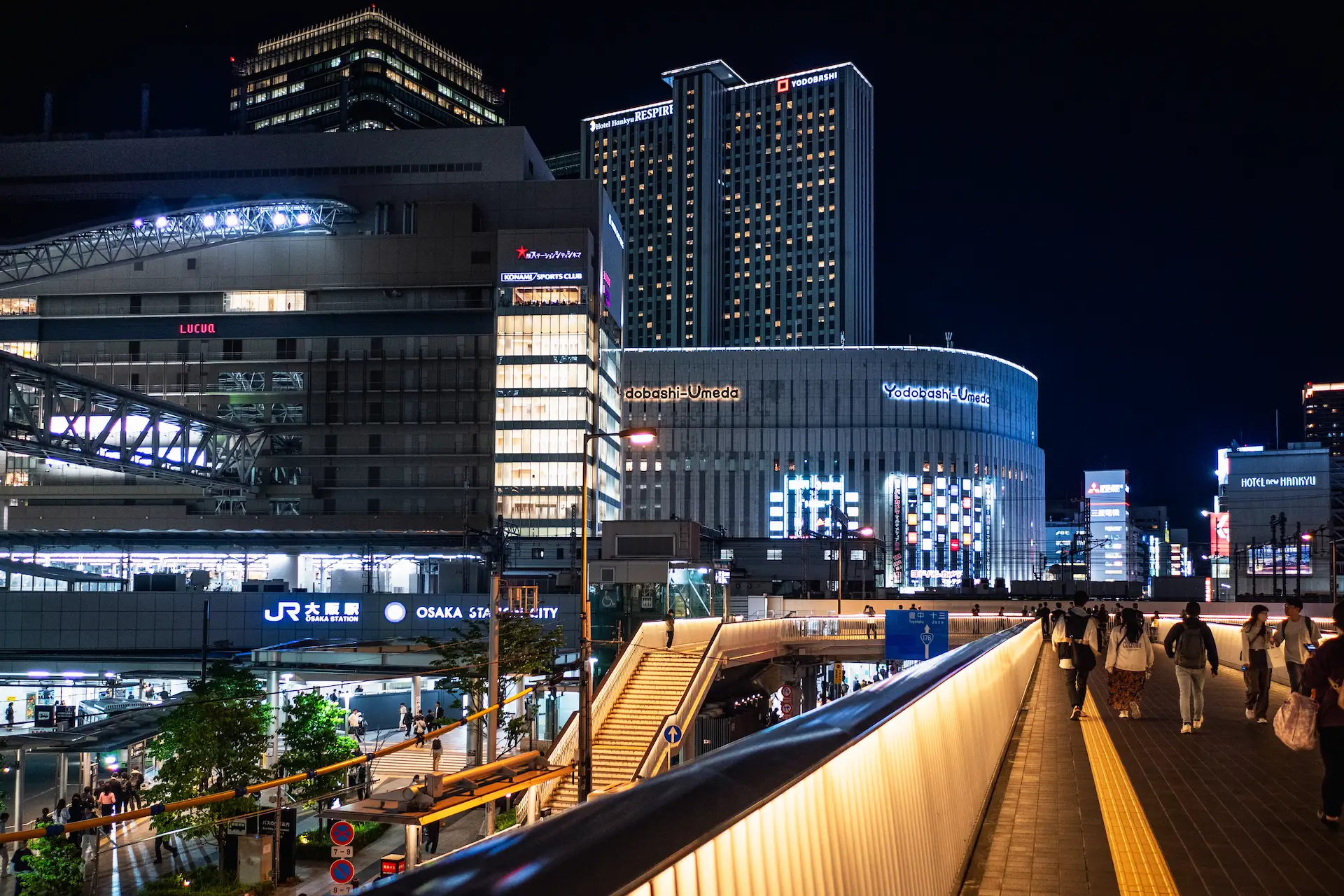
Taking the Tokaido Shinkansen back toward Tokyo brings you to the ultimate culmination of your japan travel itinerary tokyo kyoto osaka. Tokyo is where the tension between the ancient past and the hyper-future dissolves into absolute harmony. Its modernity doesn’t feel raw or chaotic; it feels completely mature, intentional, and impeccably smooth. Here, a futuristic, mirror-clad skyscraper can sit directly adjacent to a serene, centuries-old Shinto shrine garden, and neither structure feels out of place. The world’s most advanced infrastructure operates with an understated elegance, offering a perfectly curated mix of both worlds running in absolute parallel precision.
Essential Attractions & Neighborhood Contrasts
- Senso-ji Temple (Asakusa): Tokyo’s oldest and most iconic Buddhist temple. Walking through the Kaminarimon (Thunder Gate) and up the historic Nakamise shopping street offers an incredible look at old-world charm.
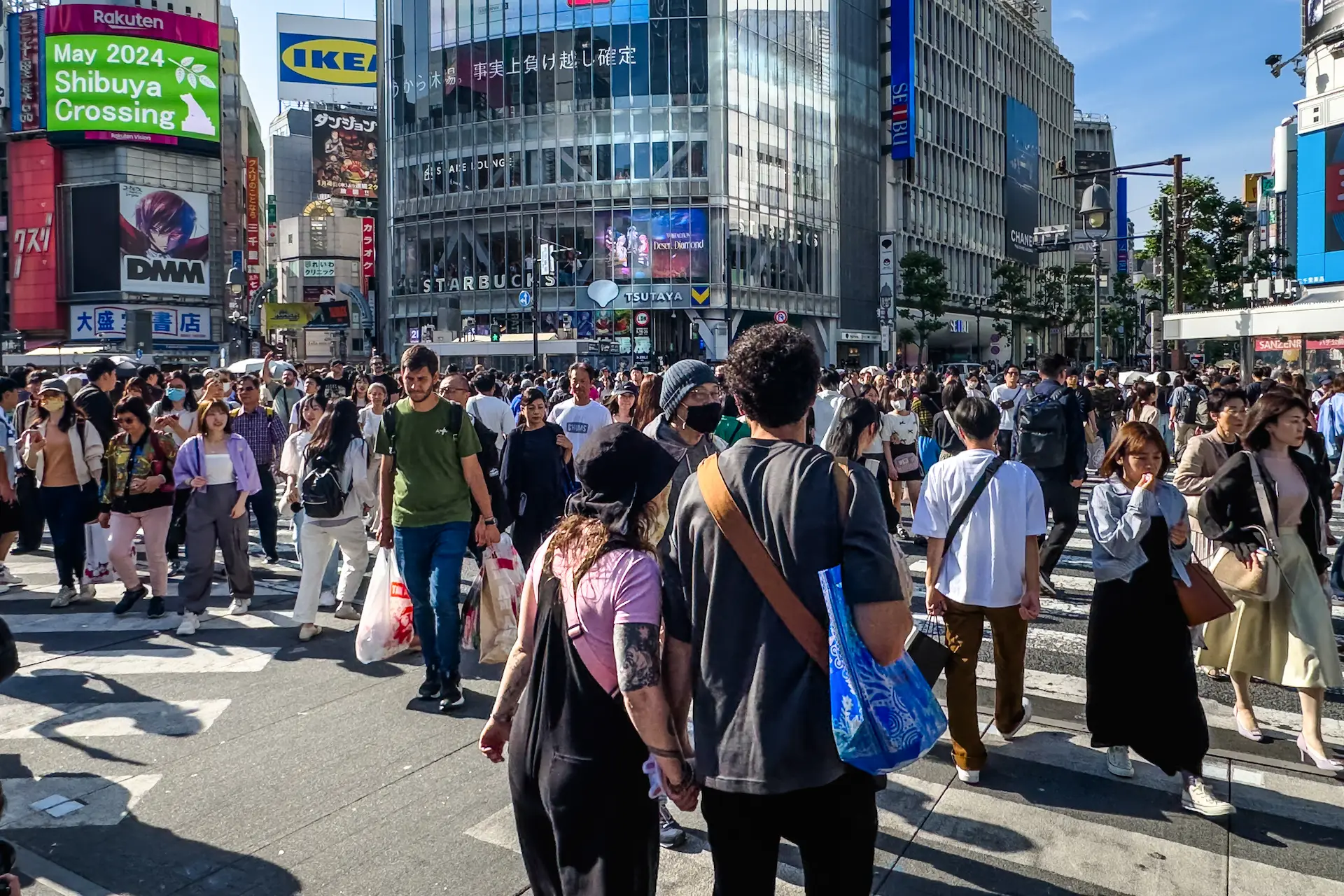
- Shibuya Crossing & Shibuya Sky: No first trip is complete without standing amidst the sea of humanity at the world’s busiest pedestrian crossing. For the best view, head up to the open-air deck at Shibuya Sky to see the intersection from above.
- Meiji Shrine & Yoyogi Park: A masterclass in city green spaces. Stepping through the massive wooden torii gates into the quiet, dense forest surrounding the shrine makes you forget you are in the middle of the world’s most populous metropolis.
- The Viewpoint Giants: To truly comprehend Tokyo’s endless horizon, visit the free observation decks at the Tokyo Metropolitan Government Building in Shinjuku, view the classic mid-century profile of Tokyo Tower, or ascend the futuristic lattice of the Tokyo Skytree.
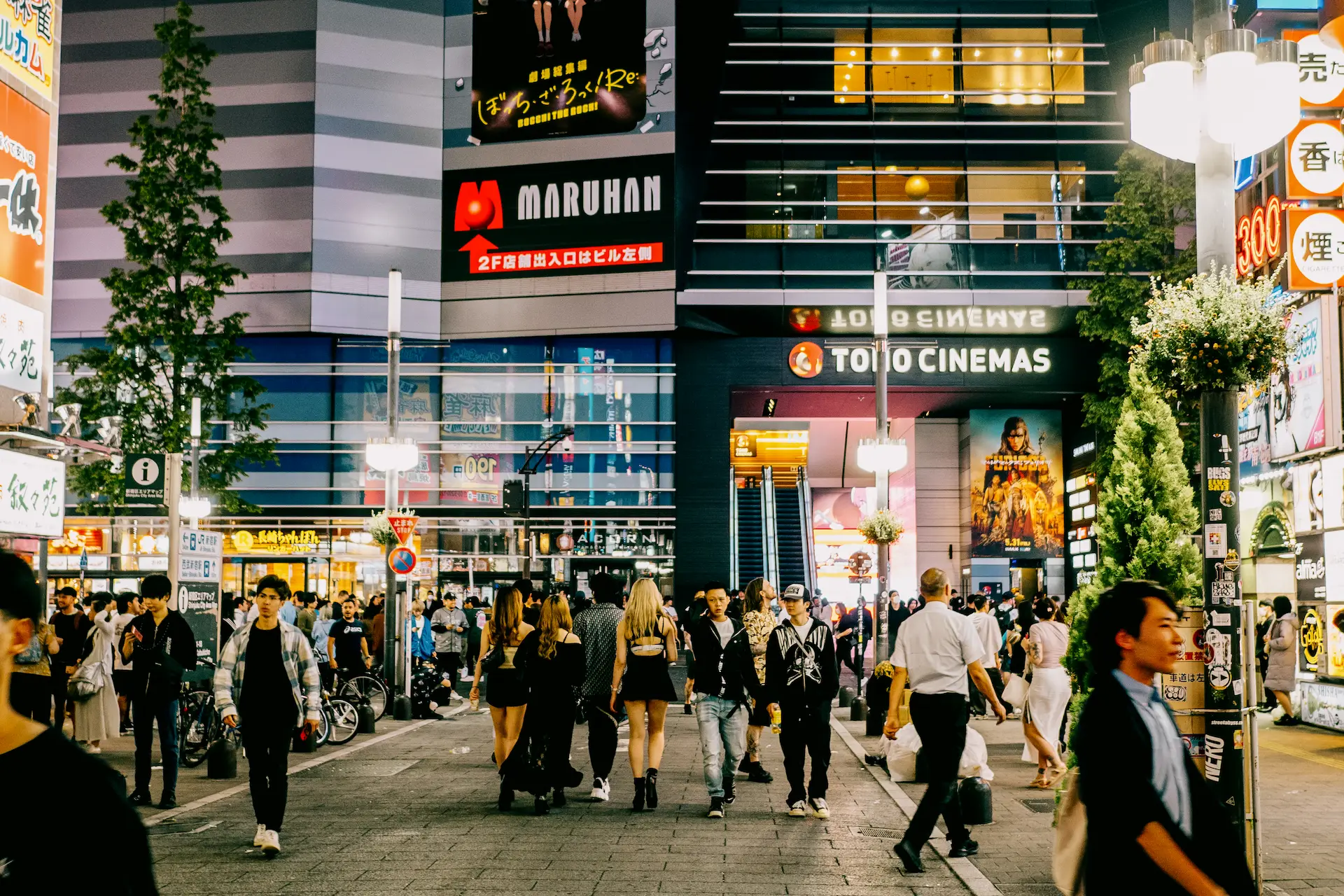
- Neighborhood Exploration (Nakameguro, Ginza, & Kabukicho): Spend a quiet morning walking along the canal in Nakameguro, explore the high-end storefronts of Ginza, and contrast it with the dense, glowing neon nightlife lanes of Kabukicho.
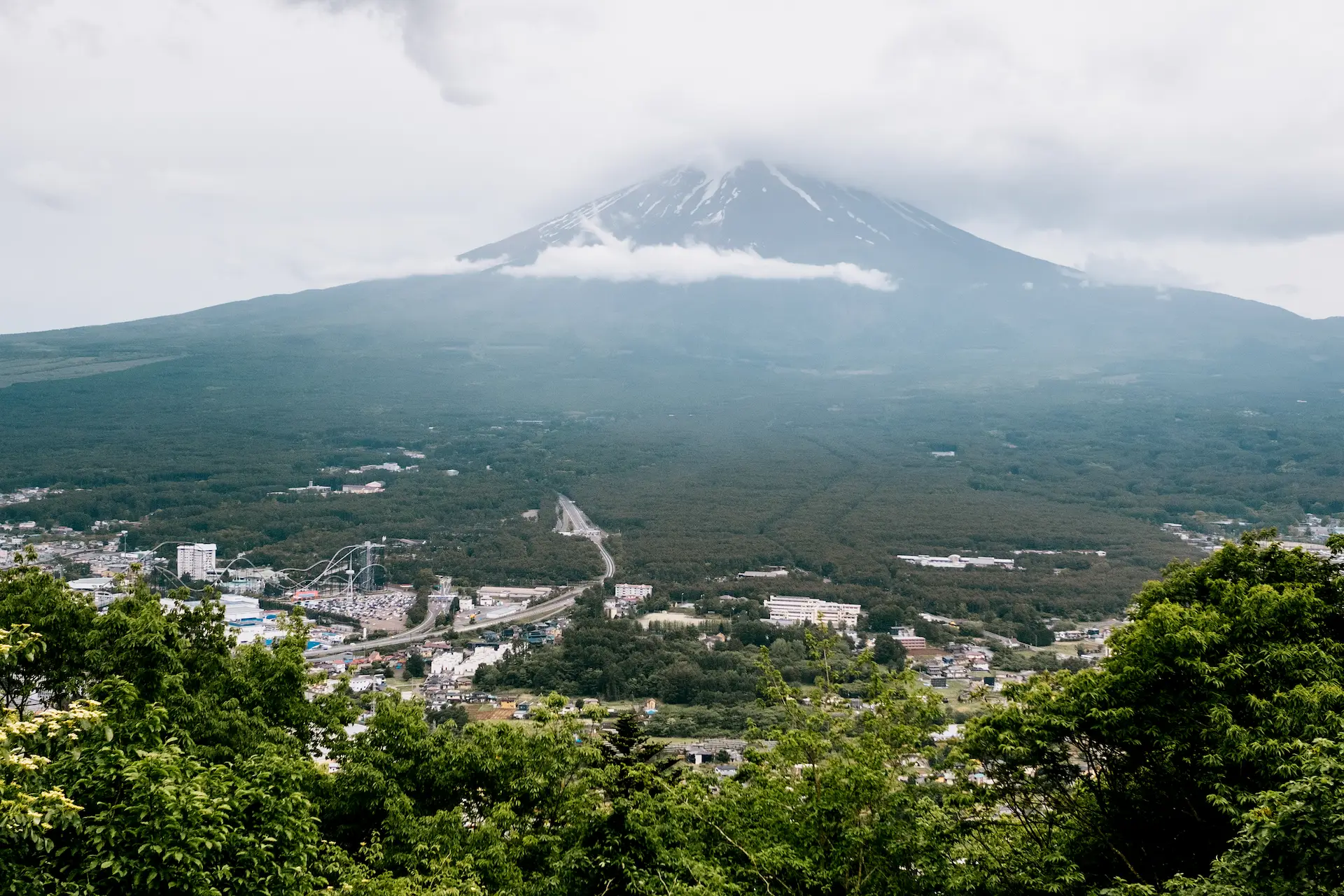
- Mt. Fuji & Hakone Day Trips: If you want a breath of mountain air, Tokyo provides seamless rail connections to the hot springs of Hakone or the scenic viewing stations surrounding Mt. Fuji.
🗺️ Logistics: Executing the Golden Route Loop
To execute this timeless itinerary seamlessly without getting bogged down in logistical friction, a classic, repeatable loop works best:
[Arrival] Tokyo (Narita/Haneda)→Shinkansen to Kyoto→Local Transit to Osaka→Shinkansen Return to Tokyo [Departure]
🚄 Shinkansen vs. Local Trains: Navigating Between Cities
One of the most common questions new travelers ask is: “Do I take a local train between cities, or do I need the bullet train?” Understanding the difference completely changes how you plan your days.
- The Shinkansen (Bullet Train): Your Inter-City Express
Think of the Shinkansen like a premium commercial flight, but entirely on tracks and infinitely more comfortable. These hyper-fast trains operate on completely separate, dedicated lines specifically designed for long-distance travel. They travel at speeds up to 200 mph, transforming a massive cross-country journey into a quick, smooth ride. For instance, traveling from Tokyo to Kyoto via the Shinkansen takes just 2.5 hours, whereas a series of local commuter trains would take over 8 hours and a dozen stressful transfers. - Local Trains & Subways: Your In-City Workhorses
Local trains, rapid trains, and subways are meant for commuting within a city or moving to immediate neighboring towns (like traveling the short 30-minute distance between Kyoto and Osaka). They stop frequently, feature bench seating, do not require or allow seat reservations, and are paid for with a simple tap of your digital phone transit card. You cannot ride a long-distance Shinkansen with just a regular subway tap.
💡 The Golden Route Travel Blueprint
To keep your journey entirely frictionless, here is the exact transit breakdown for moving along the loop:
- Tokyo to Kyoto (The Shinkansen Leg): You will depart from major hubs like Tokyo Station or Shinagawa Station and ride the Tokaido Shinkansen directly to Kyoto Station.
- Pro-Tip: When booking your seats on official apps like SmartEX, try to reserve a “Window E” seat on the right-hand side of the train leaving Tokyo. On a clear day, you’ll get a perfect, unobstructed view of Mt. Fuji framing your window as you fly past.
- Kyoto to Osaka (The Local Leg): Because these two cities sit right next to each other, you do not need a bullet train. You simply head to Kyoto Station, tap your phone’s digital transit card at the regular turnstile, and hop on the JR Special Rapid Service. In just 30 minutes, you will walk out into downtown Osaka for the cost of a standard local fare.
- Osaka to Tokyo (The Return Leg): When it’s time to head back to the capital, you will go to Shin-Osaka Station (the dedicated bullet train hub in Osaka) and catch the Shinkansen straight back into Tokyo.
Essential First-Timer Transit Tips:
- Bullet Train Efficiency: Use official tools like SmartEX to book your Shinkansen (bullet train) seats in advance online. Traveling between Tokyo and Kyoto via the Tokaido Shinkansen line is incredibly smooth, and on a clear day, you can catch a glimpse of Mt. Fuji framing the right side of the train window.
📝 A Living Document for Your Japan Discovery
This layout forms the foundational itinerary of Japan’s iconic travel centers. By knowing exactly what highlights define each area, looking closely at how they balance their history, and unlocking the power of digital transit tools right from your phone, you can easily bypass the common tourist pitfalls.
Because these cities are infinitely deep, this guide is designed to be a living document—a foundation that can be expanded, updated, and built upon with fresh discoveries every single time you return to explore further.